
In the American justice system, accusations—whether civil or criminal—often move faster than evidence. Long before a case is resolved, allegations alone can destroy reputations, careers, families, and livelihoods. Even when innocence is ultimately established, the damage is frequently irreversible.
This structural imbalance is not abstract. It affects ordinary citizens across social, economic, and political lines. And it raises a difficult but necessary question: what meaningful options exist for individuals who wish to demonstrate good faith and cooperation with the justice system at the earliest and most damaging stages of an accusation—without sacrificing their constitutional rights?
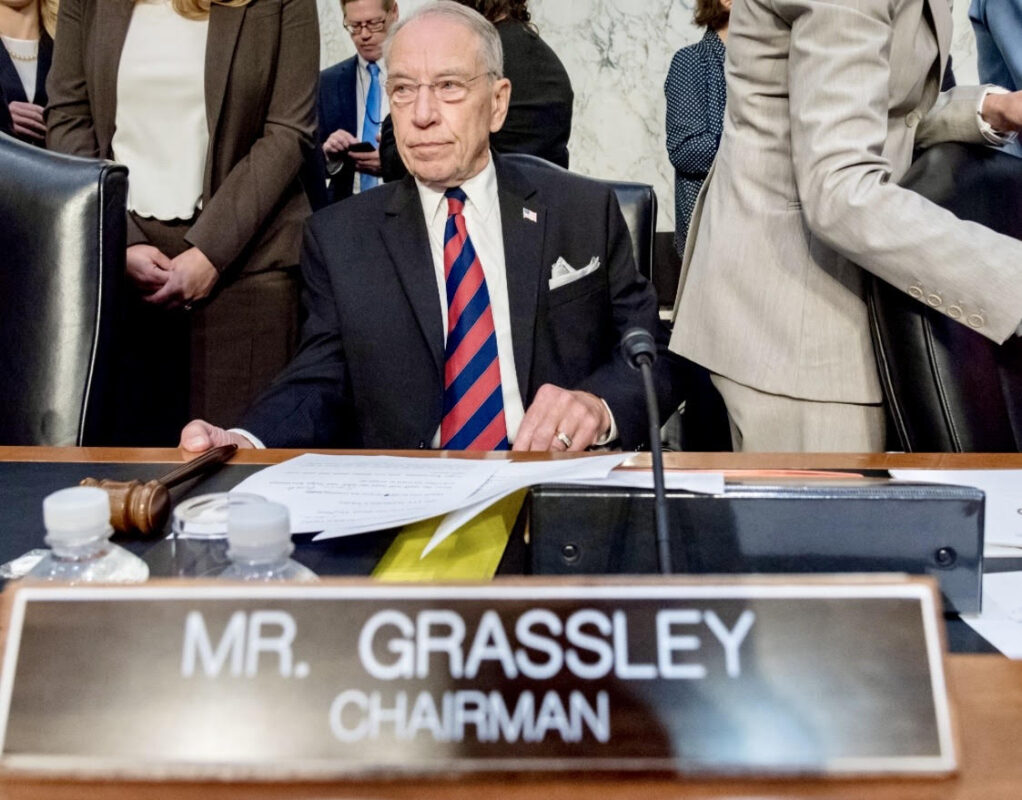
That question motivated me, as a U.S. citizen, to formally submit a narrowly tailored legislative proposal to the United States Senate Judiciary Committee, chaired by Senator Chuck Grassley. The proposal is titled “Voluntary Submission to Polygraph Examination as a Complementary Means of Defense,” and it applies to both civil and criminal proceedings.
The intent of the proposal is often misunderstood, so clarity is essential.
This initiative does not seek to replace established evidentiary standards. It does not alter the burden of proof. It does notcompel participation. And it does not override constitutional protections, including the Fifth Amendment right against self-incrimination.
Instead, it offers something far more modest—and potentially valuable: a strictly voluntary option, initiated solely by the defense, that may be considered only as complementary information and solely at the discretion of the presiding judge.
The proposal explicitly prohibits any form of coercion, direct or indirect. A refusal to submit to a polygraph examination may not give rise to negative presumptions, adverse inferences, or procedural prejudice, whether in civil litigation or criminal prosecution. All existing rules of evidence remain fully intact.
Why consider such an option at all?
Because false, frivolous, or uncorroborated allegations are not rare—and their consequences are profound. Even when dismissed, they impose social stigma, financial hardship, psychological stress, and lasting digital records. In many cases, the harm occurs long before a courtroom ever weighs the facts.
The proposal seeks to address that gap by allowing individuals, when they believe it serves their defense, to signal cooperation and good faith without forfeiting any rights or shifting any legal burdens.
It is worth noting that polygraph examinations, when administered according to recognized professional standards, have long been used by national security and intelligence agencies, including the Central Intelligence Agency, as tools for credibility assessment. While no one claims that a polygraph “proves” truth or innocence, its controlled use by the State raises an unavoidable question: if the polygraph is considered useful in protecting institutional interests, why should its strictly voluntary, defense-initiated use be categorically excluded when a citizen seeks to protect their honor and reputation?
The proposal does not answer that question with certainty. It simply argues that the question deserves a responsible, constitutional, and evidence-based legislative discussion.
Beyond individual cases, the initiative also aims to discourage bad-faith accusations, reduce abusive or unnecessary litigation, and strengthen public confidence in the fairness of judicial proceedings. A justice system perceived as indifferent to early-stage harm risks eroding the very trust upon which it depends.
This proposal does not demand adoption. It invites debate.
In a constitutional democracy grounded in due process, the willingness to examine whether existing exclusions still serve justice is not a threat to the system—it is a measure of its maturity.
_______________________________
Washington, D.C. | December 16, 2025 — U.S. citizen Samuel Sales Saraiva formally submitted to the United States Senate Judiciary Committee, chaired by Senator Chuck Grassley, a legislative proposal entitled “Voluntary Submission to Polygraph Examination as a Complementary Means of Defense,” applicable to judicial proceedings of both civil and criminal nature.
The initiative was presented as a contribution to the institutional debate aimed at strengthening due process guarantees, the integrity of the civil and criminal justice system, and public confidence in the administration of justice, in light of recurring concerns regarding false, frivolous, or uncorroborated accusations in both criminal and civil contexts, as well as the reputational, social, and economic harms resulting from such practices.
Scope and Foundations of the Proposal
According to the submitted text, the proposal has a strictly limited scope and does not seek to replace established evidentiary standards or alter the burden of proof applicable in civil or criminal proceedings. The proposal establishes that submission to a polygraph examination would be entirely voluntary and may be requested exclusively by the party seeking to use it in their defense—whether in a civil or criminal proceeding—and considered solely as complementary evidence, always at the discretion of the presiding judge and in accordance with applicable rules of evidence.
The text emphasizes that all fundamental constitutional guarantees are fully preserved, including the right against self-incrimination, where applicable. The proposal expressly prohibits any form of coercion, direct or indirect, and establishes that refusal to submit to the examination may not give rise to negative presumptions, adverse inferences, or any form of procedural prejudice, in either civil or criminal proceedings.
Institutional Objectives
According to the author, the initiative seeks to provide an additional good-faith instrument allowing an accused or defendant, when deemed appropriate, to demonstrate cooperation with the civil or criminal justice system without compromising fundamental rights. The text also identifies secondary objectives, including the deterrence of bad-faith accusations, the reduction of unnecessary or abusive litigation, and the strengthening of institutional credibility of the justice system as a whole.
The proposal further notes that polygraph examinations have historically been used by national security and intelligence agencies, when administered in accordance with recognized technical standards, and that their defensive use—strictly voluntary and properly regulated, in both civil and criminal contexts—may be subject to responsible and constitutionally compatible legislative evaluation.
Saraiva argues that, given the acknowledged effectiveness of the polygraph when employed by the State in certain institutional contexts, there is no logical or legal impediment to its voluntary use also being effective in protecting a citizen’s honor, mitigating procedural abuses, and preserving the presumption of innocence, including in disputes of a civil nature.
Original Documents
The three (3) documents reproduced in full below correspond to the original content submitted in English to the United States Senate Judiciary Committee, for purposes of transparency, public record, and reference.
DOC #1
The Honorable Chuck Grassley
Chairman, Senate Judiciary Committee
United States Senate
224 Dirksen Senate Office Building
Washington, D.C. 20510
December 16, 2025
Dear Chairman Grassley:
I respectfully submit for your consideration the attached legislative proposal entitled “Voluntary Submission to Polygraph Examination as a Complementary Means of Defense.” This proposal is presented in a spirit of constructive civic participation and as a contribution to the ongoing work of the Senate Judiciary Committee in safeguarding due process, institutional integrity, and public confidence in the administration of justice.
The initiative has a strictly limited scope and does not seek to displace established evidentiary standards or prosecutorial burdens. Rather, it offers a voluntary procedural option, initiated by the defense, which may be considered, at judicial discretion, as complementary information. Its purpose is to allow an accused individual, when appropriate, to demonstrate good-faith cooperation with the justice system, while fully preserving all constitutional protections, including the Fifth Amendment privilege against self-incrimination.
In light of documented concerns regarding the misuse of judicial processes in both civil and criminal proceedings, as well as the social harm caused by unfounded accusations, this proposal is respectfully submitted as a balanced and measured public policy consideration. It seeks to harmonize procedural safeguards with the responsible use of technological tools, with the goal of strengthening the defense and allowing individuals to assert claims of innocence, without imposing financial obligations on the federal government, the states, or the public.
I respectfully believe this proposal may merit review as part of the Committee’s broader mandate to evaluate reforms that enhance fairness, accountability, and efficiency within the justice system.
I remain at your disposal should you or your staff require additional information or clarification. I would appreciate confirmation of receipt at your convenience and thank you and your staff for your time and consideration.
Respectfully,
Samuel Sales Saraiva
Citizen of the United States
Contact Information:
Email: samuelsalessaraiva@gmail.com
Mobile: (202) 999-9078 (WhatsApp)
DOC #2
The Honorable Chuck Grassley
Chairman, Senate Judiciary Committee
United States Senate
224 Dirksen Senate Office Building
Washington, D.C. 20510
December 16, 2025
SUBJECT: Submission of Legislative Draft – Voluntary Polygraph Defense Safeguards Act
Dear Chairman Grassley:
I respectfully submit for your consideration the attached draft legislative proposal entitled “Voluntary Polygraph Defense Safeguards Act.”
In light of documented concerns regarding the misuse of judicial processes in both civil and criminal proceedings, and the social harm caused by unfounded or uncorroborated accusations, the proposed legislation seeks to recognize, on a strictly voluntary basis, the ability of a party to request submission to a polygraph examination as a complementary means of defense.
The proposal is carefully circumscribed, constitutionally compatible, and expressly preserves the applicable burden of proof, the privilege against self-incrimination, and full judicial discretion regarding evidentiary admissibility. Its purpose is to provide an additional good-faith defensive safeguard for individuals facing false or unsupported allegations, while contributing to procedural integrity, efficiency, and the protection of fundamental rights.
From a reasoned and objective perspective, the proposal rests on a technically sound foundation, is constitutionally defensible, and presents a politically viable public policy option.
I submit this draft with the utmost respect for the institutional role of the Senate Judiciary Committee and in the interest of constructive dialogue on potential avenues to improve fairness and confidence in judicial proceedings.
Thank you for your time and consideration.
Respectfully submitted,
Samuel Sales Saraiva
Citizen of the United States
DOC #3
LEGISLATIVE MEMORANDUM
Proposed Legislation: Voluntary Polygraph Defense Safeguards Act
ISSUE PRESENTED
Parties facing false, frivolous, or uncorroborated allegations in civil or criminal judicial proceedings often lack the ability to promptly present material evidence capable of countering fabricated or bad-faith narratives, resulting in severe reputational, social, and economic harm regardless of the final outcome of the case.
PROPOSED SOLUTION
Authorize a party in a judicial proceeding, whether civil or criminal, on a strictly voluntary basis, to request submission to a polygraph examination as a complementary means of defense, subject to judicial discretion and applicable rules of evidence.
KEY FEATURES
• Entirely voluntary; no coercion permitted.
• No adverse inference may be drawn from refusal to submit.
• Administered solely by certified and independent examiners.
• Admissible exclusively as complementary evidence, at the court’s discretion.
• No alteration of the applicable burden of proof in civil or criminal proceedings.
• No infringement of constitutional protections, including the privilege against self-incrimination, where applicable.
CONSTITUTIONAL CONSIDERATIONS
The proposal is strictly designed to fully comply with constitutional safeguards, preserving due process, judicial discretion, and established evidentiary standards applicable to both civil and criminal proceedings.
PUBLIC POLICY RATIONALE
Polygraph examinations have long been used by national security and intelligence agencies, including the Central Intelligence Agency (CIA), as credibility assessment tools when administered in accordance with recognized professional standards. Allowing their strictly voluntary defensive use in appropriate civil and criminal contexts may help deter bad-faith allegations, reduce unnecessary or abusive litigation, and protect the integrity of judicial proceedings.
STATUS
Draft legislation submitted for consideration and discussion by the Senate Judiciary Committee.