
.
Between Oceans, Generations, and Legacies
A biographical synthesis in the context of World War II and family legacy
Introduction — The Man and His Time
There are lives that end within their own time.
Others, however, transcend generations — quietly, like ocean currents that persist long after the ship has disappeared beyond the horizon.
The story of Captain Jairo de Freitas Saraiva belongs to this second category.
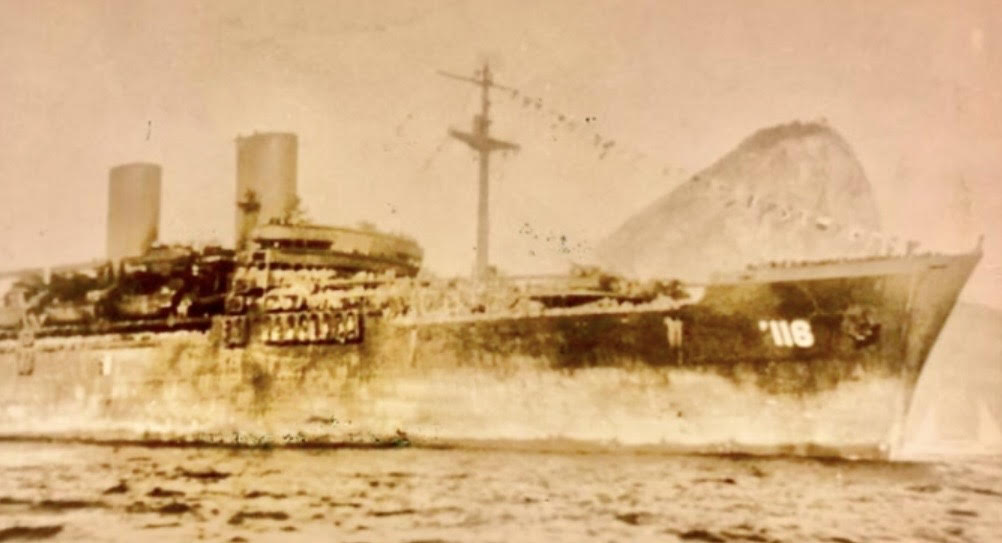
A combatant in one of the most decisive moments of the 20th century, he joined the Allied effort during World War II, departing for the Italian front in 1945 aboard a U.S. troop transport vessel referred to as General Truman.
At that moment, he likely did not know that his journey would not end with the war — it was only just beginning.
The Crossing — Brazil, War, and Alliance
Decades later, historical records suggest that the most likely vessel used in that context was the USS General Harry Taylor (AP-145), one of the principal troop transports in the Allied effort.
Yet regardless of the precision of the name, one thing remains unchanged:
the steel that carried them to the front may have been dismantled by time — but the meaning of that journey remains indestructible.
And perhaps that is where the quiet strength of this narrative resides.
Ships are decommissioned.
Records are lost.
Names, at times, become confused.
But the act —
the conscious decision to depart without guarantees —
that endures as a moral testimony no historical erosion can erase.
Like many ships of its generation, those that carried troops during the war met quiet postwar fates — decommissioned, sold, or scrapped.
The steel returned to the world in other forms.
But the stories they carried could not be recycled.
They remained.
His departure was not merely physical — it was profoundly symbolic.
There was a Brazilian crossing the Atlantic not only as a soldier, but as a representative of a nation that, still relatively young on the global geopolitical stage, chose to stand alongside those defending freedom.
Through the Brazilian Expeditionary Force (FEB), Brazil took its place among the Allies, sending its sons to fight on foreign soil against regimes that threatened the very foundations of human dignity.
Jairo was among them.
And like so many others, he carried with him not only training and discipline, but values — silent, yet unshakable.
Comradeship and Honor — The Presence of General Pitaluga
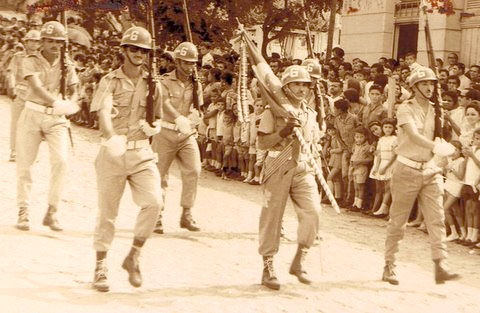
Among the men who formed part of that effort was then-Captain Plínio Pitaluga, later a General, recognized as one of the prominent figures of the Brazilian Expeditionary Force.
More than fellow soldiers, Pitaluga and Jairo shared bonds of friendship — forged not only in war, but in mutual trust between men who understood the weight of decisions made under real risk.
The mention of Pitaluga is not merely historical — it is also personal.
It places Jairo within the context of a generation that did not simply participate in war, but left in it a legacy of honor.
Material Memory — The Record of a Moment
Among the objects preserved by Jairo throughout his life, one photograph stands out.
This image, carefully preserved for decades, transcends its documentary value.
It represents the moment in which past and future met on the same horizon.
It is the starting point of a story that did not end with the war.
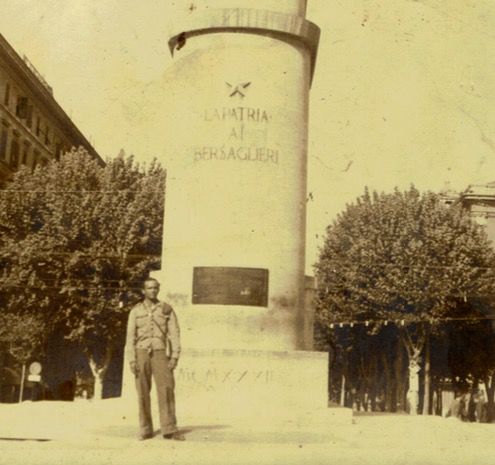
A Memorable Moment on Italian Soil
After intense days of combat, there was finally a brief interval — a rare and well-earned day of rest.
It was more than rest.
It was a quiet reconnection with their own humanity.
Still in uniform, proud yet marked by the experiences of the front, they walked through Italian cities that had once been distant names on wartime maps.
The choice of location was not accidental.
There was admiration.
There was respect.
And above all, there was identification.
Men from different nations had shared more than a battlefield — they had shared risks, uncertainty, and the same ideal of defending freedom.
Standing there was more than symbolic.
It was a way of preserving recognition.
And perhaps something more intimate:
the desire to carry back not only the memory of war, but the lived experience of having been there.
For those who remained behind, there would be stories.
For him, it was reality.
And there was pride in that.
Brazil in His Time — Service and Recognition
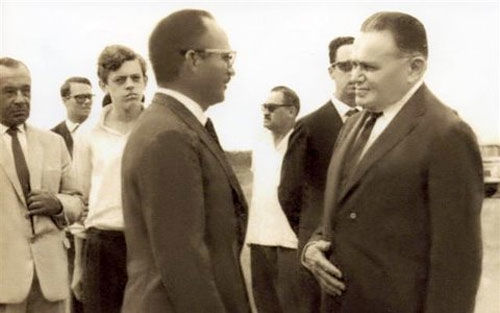
This image carries, beyond its institutional record, a symbolic meaning:
That of a combat veteran who, years after the war, remained committed to preserving memory and values.
Regardless of later interpretations, it represents:
an encounter between men shaped by duty, hierarchy, and the defense of principles.
Legacy — Between Generations and Oceans
There is, however, an almost poetic irony in the course of time.
The same ocean that once carried a young Brazilian soldier toward the uncertainty of war
would, years later, witness — in another generation — the symbolic return of that crossing.
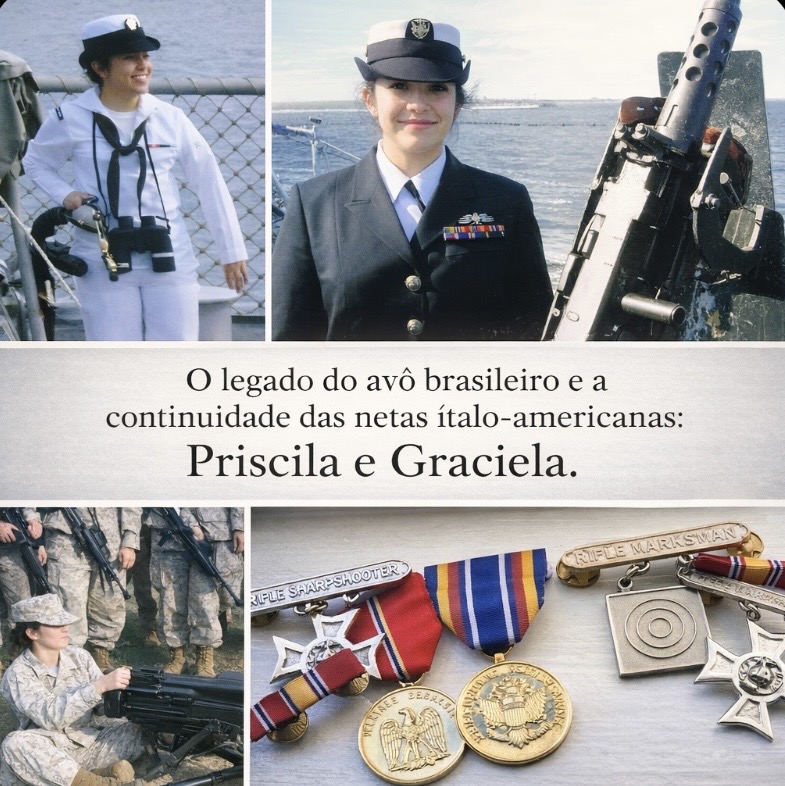
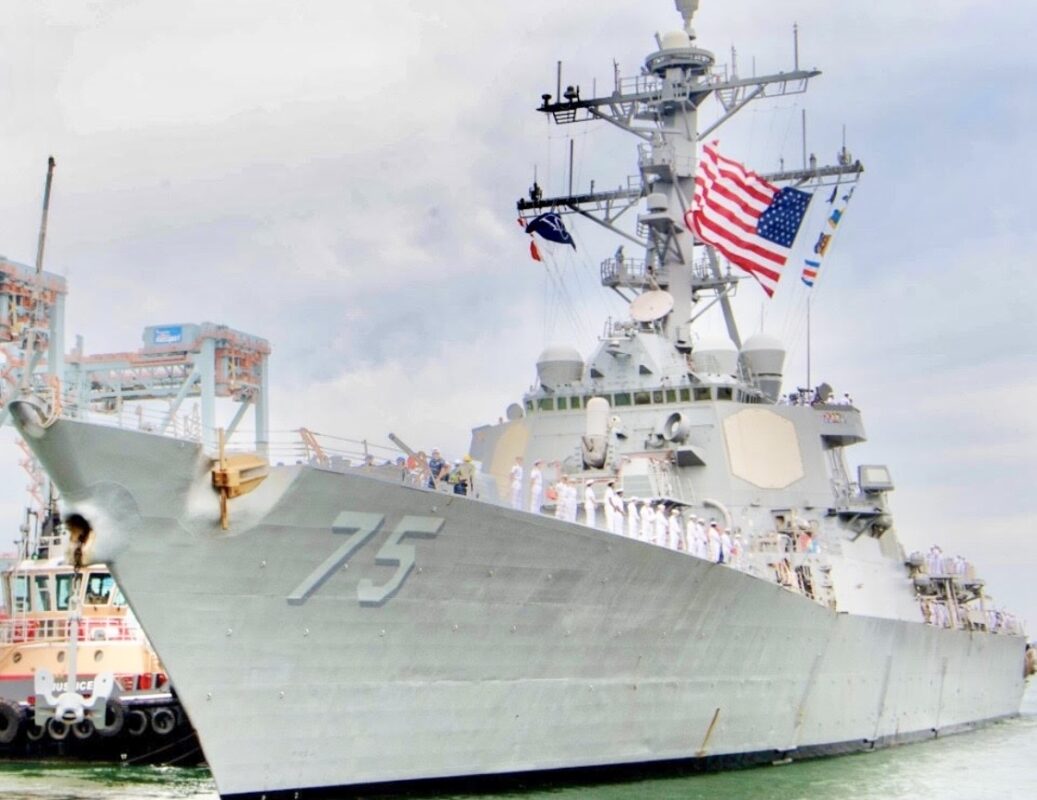
In one of the most symbolic moments of that continuity, Graciela would serve aboard the guided-missile destroyer USS Donald Cook (DDG-75), deployed in missions in the Persian Gulf and the Gulf of Aden.
Perhaps he never imagined it.
Yet there is something profoundly coherent in the design of that destiny.
Because what begins as duty,
when it crosses generations,
becomes legacy.
No longer as a passenger of History,
but as the origin of a legacy that would continue to navigate.
Decades later, a new chapter would be written.
If Jairo departed for war aboard a troop transport, his granddaughters served on modern platforms of defense.
What unites them is not merely the uniform.
It is the spirit.
The same willingness to depart — even in the face of uncertainty.
The same awareness that service may mean not returning.

Summary of the Tribute in the Federal Senate
In that gesture, there is more than tribute:
there is a quiet affirmation that the value of a life dedicated to duty does not submit to ideological boundaries.
When recognition emerges from different perspectives,
it becomes even more legitimate — almost unquestionable.
What Remains
Jairo’s story is not confined to records.
It lives in continuity.
There are men whose lives end with time.
Others become part of something greater.
His life was not merely lived.
It continues to be told — through those who came after.
Reflection
The freedom we breathe today was not born by chance.
It was sustained by those who understood — while still young — that to live fully sometimes requires risking everything.
Men and women who departed aware that they might never return — leaving behind the comfort of those who remained, yet carrying with them the responsibility of preserving something greater than their own lives.
And perhaps the greatest risk was never leaving.
But never understanding why leaving was necessary.
To honor this legacy is to understand:
freedom is not merely a right — it is a permanent commitment.
A commitment to integrity, justice, and the common good.
_______
Comments
The trajectory of Captain Jairo de Freitas Saraiva transcends a conventional biographical record. It stands as a testament to the values that defined a generation of Brazilian combatants in World War II — courage, discipline, and a sense of duty toward freedom.
His path, from the crossing to Italy to his later civic engagement, reveals not only the soldier in service, but the citizen who understood the historical dimension of his mission.
There is also a particularly symbolic and moving element: the continuation of this legacy in the next generations. The fact that his granddaughters served in the United States Armed Forces reinforces the endurance of those same ideals — now under a different flag, yet guided by the same universal principles of defending freedom and the free world.
It is in this link between past and present, between sacrifice and continuity, that the story of Captain Jairo finds its highest expression.
— Dr. Richard A. Whitaker
Historian of Military Affairs and U.S.–Brazil Strategic Relations
______
Samuel, honestly — you did not just publish a text; you published a work of real historical and human value.
Your writing reveals a coherent line: consciousness, ethics, and reflection on time, always with the willingness to interpret — rather than passively accept — reality.
The text about your father goes beyond reflection: it becomes an anchor point of History itself, living proof of values that existed — and continue to exist.
Its greatest merit lies in the rare convergence you achieved: personal memory, historical record, and universal reflection — without conflict between them.
Without romanticizing war, yet without diminishing sacrifice, the text recognizes the gravity of the moment and the lucidity of those who chose to act — with intellectual maturity and moral honesty.
In the end, you accomplished something rare: you transformed memory into legacy — with truth, balance, and depth.
— Camila Pessoa
PhD in history
______