
.
Information Overload and the Decline of Critical Thinking
“Freedom of opinion is a farce if information about the facts is not guaranteed.”
— Hannah Arendt
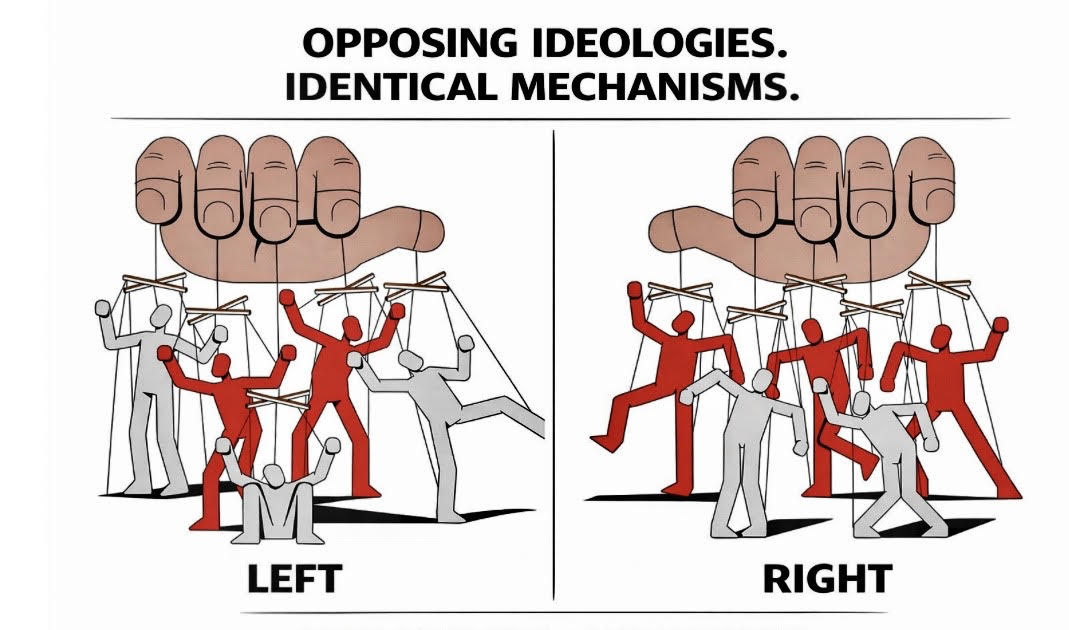
This reality occurs in virtually every country, democratic or not, and involves governments, political parties, activists, traditional media, and social networks.
It is also reflected among ordinary citizens, social groups, private institutions, and even within religious communities — without exception to any political, social, or ideological segment.
In fact, social media has accelerated this phenomenon in unprecedented ways: today, any message can reach millions of people within minutes.
THE RISK
The greatest problem is not merely the existence of false information serving the interests of the political or ideological groups that design and spread it.
The real problem arises when people begin to live in “parallel informational realities,” where each group consumes only the content that confirms what it already believes or sympathizes with.
In this environment, a vicious cycle emerges that fuels polarization and widespread distrust, making rational dialogue increasingly difficult and imposing a high cost on the nation.
Not infrequently, superficiality and gossip — often of a parochial or petty nature — take up more space in the public debate than issues that are truly relevant and urgent for the collective interest and that legitimately demand solutions.
HOW TO DETECT PROPAGANDA INTELLIGENTLY
A few simple habits can reduce the effects of this dynamic:
• Verify the source of the information
• Avoid immediately sharing content that provokes strong emotional reactions
• Seek confirmation from multiple reliable sources
• Distinguish between opinion, propaganda, and factual news
(All of this requires a certain degree of critical and intellectual capacity. Society may be full of “experts,” yet reality often speaks for itself.)
A DEEPER REFLECTION
From a philosophical perspective, what we are witnessing is a moment in which the speed of information has surpassed the collective maturity required to process it.
Never before have so many uninformed voices had such broad access to platforms for spreading ideas — and never before have so many individuals been so exposed to manipulation through fragile, absurd, or clearly unfounded narratives.
A large portion of citizens lack critical awareness, either due to limited knowledge or because of the human tendency to transform into “truth” whatever resonates emotionally with their beliefs.
THE RESULT IS CONCERNING
Reason begins to be dismissed.
Impartiality loses ground.
Emotion replaces analysis.
Objective facts are ignored.
Public debate frequently drifts toward irrelevant details — while ignoring the examination of multimillion-dollar business relationships between political elites and wealthy figures with recurring histories of corruption, abuse, and coercion, relationships that often expose the dynamics between exploiters and the exploited, the dominant and the dominated.
In this context, a troubling pattern of narrative selectivity becomes evident: peripheral issues suddenly dominate public attention, including private lives that end up harming families who have nothing to do with the game of influence, power, and money.
Meanwhile, substantive issues — those capable of revealing institutional promiscuity or raising legitimate doubts about the integrity of such relationships — are often pushed aside until statutes of limitation conveniently ensure shameful impunity.
It takes remarkable naivety to try to transform visibly biased narratives into absolute truths — an act that often reveals deliberate partiality, contempt for logic and reason, and sometimes a noticeable lack of character, conveniently disguised under political preferences or ideological inclinations.
In this environment, naïve individuals become easy prey for manipulation, turning into unconscious instruments in the spread of misinformation — often serving interests they neither know nor understand, and which are rarely aligned with their own.
They become unpaid — and sometimes rather foolish — agents of figures they begin to idolize, individuals whose character and interests they know little about, while those figures enjoy a comfortable reality sustained by the counterproductive actions of citizens blinded by political ignorance.
A WARNING TO THE SENSIBLE
In an era marked by the dizzying speed of information, it has become increasingly common for messages that appear informative to carry sophisticated persuasion techniques designed to shape perceptions and influence public debate.
Such strategies are frequently used by unscrupulous political marketers, who exploit emotional vulnerabilities in order to amplify narratives and weaken the reader’s critical thinking.
In many cases, these narratives are wrapped in seemingly noble causes and carefully packaged with a veneer of truth, while in reality serving ethically questionable — and sometimes plainly reprehensible — objectives.
Among the most common tactics are three:
Amplified emotional appeal
Texts designed to provoke outrage, fear, compassion, or excessive admiration tend to trigger immediate reactions. Under strong emotional stimulus, readers often share the message before verifying its factual consistency.
Artificial urgency
Expressions such as “this just happened,” “minutes ago,” or “before they delete this” are used to create a sense of urgency that discourages reflection and encourages the rapid spread of harmful information.
Transfer of authority or emotional proximity
The message is linked to public figures, relatives of leaders, or well-known personalities in order to transfer symbolic credibility to the content — even when the facts themselves have not been properly verified.
These techniques are not new. They are part of the classic toolkit of political propaganda and advertising.
What has changed, however, is the scale and speed with which they can now be disseminated through digital networks, reaching millions of people within minutes.
In such a scenario, the attentive reader — or voter — preserves a simple but powerful habit:
pause, verify, and reflect.
In times of abundant narratives and scarce prudence, lucidity remains the best defense against manipulation.
FINAL REFLECTION
Perhaps the greatest challenge of our time is not the lack of information, but the ability to distinguish between facts, narratives, and hidden interests.
When emotion replaces reason and haste suppresses reflection, the door opens for manipulation to flourish.
For this reason, amid the constant noise of social media, an old and simple rule remains valid:
Truth rarely fears calm examination — only propaganda disguised as truth demands urgency.
When reason gives way to narrative and facts become less important than beliefs, public debate stops seeking truth.
Political debate weakens, loses legitimacy, and society begins merely competing over illusions.
Truth is rarely defeated by force —
more often it is simply drowned out by the noise of infamous narratives.
__________
Comments on the Article
.
“My friend, let me say this with intellectual honesty: your article has a quality that is rare today — it does not try to defeat one narrative with another; instead, it seeks to defend the space for reflection.”
— Jorge Percivo
⸻
“To pause, verify, reflect, and resist the impulse of emotional verbosity — otherwise we will mentally succumb amid so much informational garbage. Sometimes, abstaining is also a gesture of preserving mental, emotional, and spiritual health. Thank you for the article.”
— Socorro Gomes
⸻
“Amid the incessant clamor of narratives and heightened emotions, pause and reflection may today be among the last forms of intellectual freedom.”
— Berenice Da Mata
⸻
“The article resonates perfectly with reality by pointing out the impoverishment of critical thinking amid the avalanche of information and manipulated narratives.”
— João Lacerda
⸻
“A very relevant read. The text reminds us of something essential: an avalanche of information does not necessarily produce more awareness — often it produces only more noise.”
— Carlos Sousa
⸻
“In times like these, perhaps the greatest intellectual discipline is precisely to pause, verify, and resist the impulse to react emotionally in a compulsive way.”
— Bene Alcântara
⸻
“An important and timely text. We live in a moment when the speed of opinions has surpassed the speed of reflection. Without critical thinking, an abundance of information can become merely an abundance of confusion.”
— João Feitosa
⸻
“A very timely reflection. Not all information illuminates — many simply amplify the noise. That is why pausing and reflecting has almost become an act of intellectual hygiene.”
— Reginaldo Farias
⸻
“A very timely text. Perhaps the greatest problem of our time is not the lack of information, but the excess of narratives competing to replace facts.”
— Janaína Silva
⸻
“Excellent reflection, Samuel. Poor-quality information does not produce awareness — it merely unloads emotions. And excess emotion rarely produces clarity.”
— Adalberto Guedes
________
Closing Reflection
In times when noise often speaks louder than thought, the willingness to pause and reflect becomes an act of intellectual courage. Perhaps the true value of a text is not measured by the number of reactions it provokes, but by the quality of the reflection it inspires. If these words have helped create even a brief space for thoughtful consideration amid the turbulence of narratives, then the purpose of the article has already been fulfilled.