
Lenient penalties, collective omission, and the moral failure of a society
There is a silent violence that repeats itself every day, far from the spotlight, and it reveals a great deal about the ethical backwardness of a society. Defenseless animals—who know only the language of loyalty, care, and presence—continue to be treated as disposable objects by people incapable of empathy.
It is common to find dogs and cats abused, sick, starving, and abandoned to their fate, especially in countries whose sociocultural development lags behind those that have advanced in moral awareness. Many are deliberately run over simply for barking while protecting their owners and territory with admirable devotion and loyalty. Others are poisoned, drowned, hanged, or subjected to forms of cruelty that defy even the most basic notion of humanity.
These acts are not exceptions. They are far more frequent than society is willing to admit, and they persist because they find fertile ground in lenient sentences, negligent investigations, and a complacent justice system. Impunity is not neutral—it educates for the repetition of barbarity.
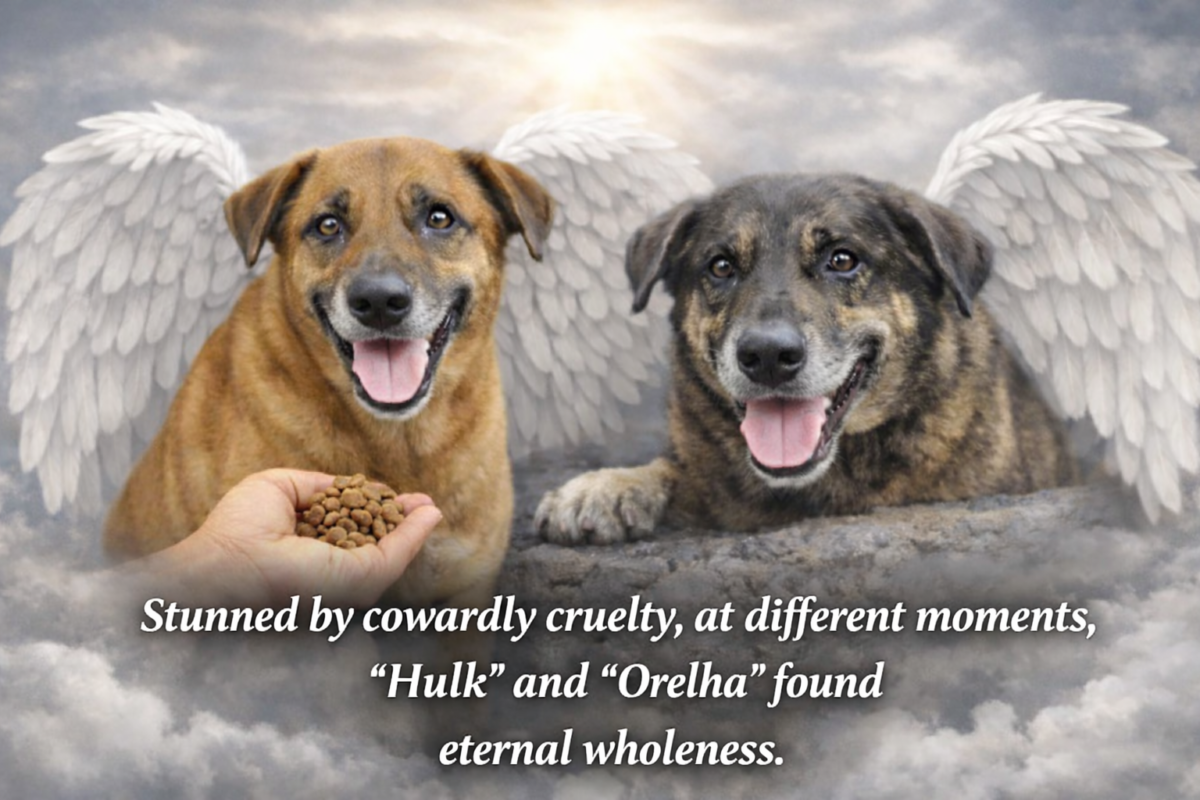
This week, the case of the community dog Orelha (Portuguese for “Ear,” a gentle, affectionate nickname), brutally assaulted in Florianópolis in southern Brazil, shocked the civilized segment of that society—not because it was an isolated incident, but because it exposed the normalization of cruelty. It was merely the visible tip of a much larger iceberg.
Last month, another case passed almost unnoticed. An extremely gentle dog named Hulk was cowardly beaten. Even injured, he managed to make his way home. Perhaps hungry, perhaps in deep pain, he sought a quiet corner where, without help, he resigned himself to death. No one rescued him. No one interrupted his suffering.
Stunned by a cruelty he could never comprehend, Orelha left this plane and moved toward the light.
Hulk did the same—silently.
The social response to crimes like these cannot be merely symbolic. Lengthy sentences involving mandatory, supervised labor linked to animal rescue, care, and protection programs would be not only punitive, but morally and pedagogically transformative.
Animals do not torture for pleasure.
They do not exercise violence to assert power.
No domestic non-rational being practices the cruelty that some humans have normalized.
Protecting animals is not emotional excess.
It is civilization in practice.
Lessons That Remain
There are human beings who have renounced their own humanity—not by instinct, not by necessity, but by a conscious choice of cruelty. In doing so, they become inferior to those labeled “irrational,” who do not torture, do not kill for pleasure, and do not humiliate the defenseless.
Animals:
- feel hunger and seek food
- feel fear and flee
- feel affection and reciprocate it
They do not plan evil.
They do not organize to cause harm.
They do not derive pleasure from the suffering of others.
When a human does this, it is not rationality—it is ethical, mental, and spiritual collapse.
The shame does not belong only to those who care.
The shame belongs to a society that:
- relativizes barbarity;
- labels cruelty as an “isolated case”;
- punishes lightly what should provoke absolute moral revulsion.
What I do here—writing, recording, remembering, naming, and honoring animals who suffer under anonymity—is the opposite of that silence.
It is to affirm that conscience still exists, that there are still those who see, and still those who refuse to accept indifference.
Orelha and Hulk had no defense.
But they were given something rare: memory, truth, and dignity.
That already places them above many who merely breathe—and places all of us who reject complicit silence on the right side of history.
If this text awakened something in you, share it.
Conscience, too, spreads.